
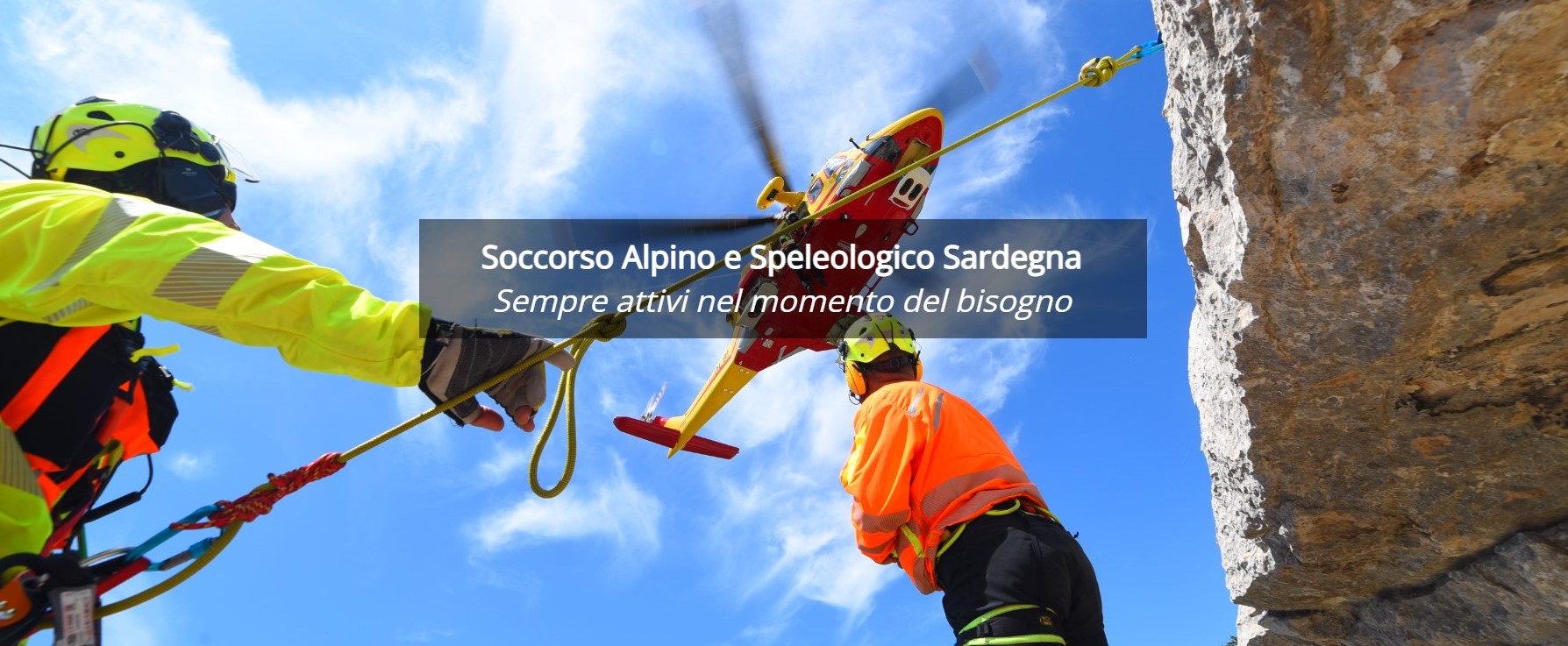
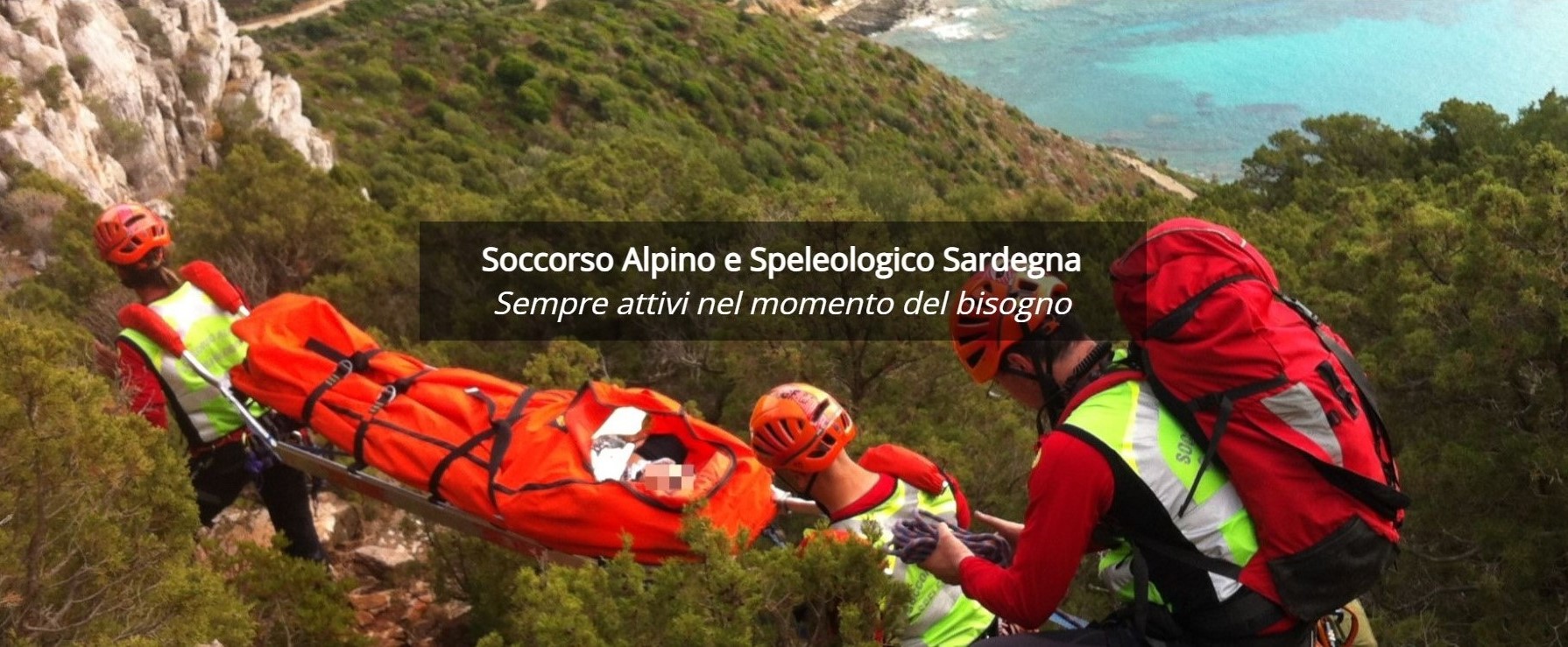



In Sardegna, in caso di necessità, la chiamata di soccorso deve avvenire chiamando il numero 118 del S.U.E.M. (Servizio Unico Emergenze Mediche).
E’ fondamentale comunicare all’operatore di soccorso quanto segue:
1. Da dove si sta chiamando.
2. Il numero di telefono da cui si sta chiamando; il telefono non deve mai essere abbandonato, chi da l’allarme diventa l’unica possibilità di contatto tra infortunato e soccorritori (se la chiamata dovesse interrompersi è importante che il telefono venga lasciato libero per consentire alla Centrale operativa di richiamare). Sarebbe buona norma intraprendere l’escursione o l’uscita in grotta dotandosi di batteria di scorta e/o caricabatteria da auto per il cellulare.
3. L’esatta località dove è ubicata l’area da cui si sta chiamando (Comune, Provincia o sicuramente un riferimento importante di ricerca rilevabile sulla cartina).
4. La propria posizione se in posssesso di altimetro (opportunamente tarato) o GPS;
5. Indicazioni in merito a cosa è visibile dall’alto (pendio, bosco, cima, rifugio, ecc.).
6. Cosa è successo (specificando all’operatore che ci si trova in montagna o in grotta);
7. Quando è successo;
8. Quante persone sono state coivolte nell’incidente.
9. Le proprie generalità (fondamentali).
10. Le condizioni evidenti della/e persona/e coinvolta/e es: difficoltà respiratorie, coscienza, perdita di sangue, traumi visibili, ecc..
11. L’esatta posizione del ferito (se seduto, se disteso supino, se disteso prono, se appeso, ecc).E’ indispensabile rispondere in maniera completa alle domande dell’operatore che avvia l’intervento di soccorso e raccoglie dati fondamentali per l’ottimizzazione dell’intervento stesso.
CONSIDERANDO CHE L’INTERVENTO IN MONTAGNA PUO’ EFFETTUARSI ANCHE SENZA L’AUSILIO DELL’ELICOTTERO E’ BENE INFORMARE L’OPERATORE IN MERITO A:
- Tempo impiegato a piedi dall’automezzo al luogo dell’evento;
- Condizioni meteo sul posto;
- Condizioni del terreno;
- Presenza di vento;
- Visibilità sul posto;
- Presenza nell’area dell’evento di fili a sbalzo, funivie, linee elettriche ecc.
In Sardinia, the emergency call must be made by calling the S.U.E.M. number 118 in case of necessity.
It is essential to communicate the following to the rescue operator:
1. Where you are calling from.
2. The telephone number you are calling from; the telephone must never be abandoned, the person who raises the alarm becomes the only possibility of contact between the injured person and the rescuers (if the call were to be interrupted the telephone must be left free to allow the Operations Center to call back).It would be a good idea to undertake the excursion or cave trip by equipping yourself with a spare battery and car charger for your mobile phone.
3. The exact location where the area you are calling from is located (Municipality, Province or certainly an important research reference that can be found on the map).
4. Your position if you have an altimeter (appropriately calibrated) or GPS;
5. Information regarding what is visible from above (slope, forest, peak, shelter, etc.).
6. What happened (specifying to the operator that you are in the mountains or in a cave);
7. When it happened;
8. How many people were involved in the accident.
9. Your details (fundamental).
10. The obvious conditions of the person(s) involved e.g.: difficulty breathing, consciousness, blood loss, visible trauma, etc.
11. The exact position of the injured person (whether sitting, lying supine, lying prone, hanging, etc.). It is essential to answer completely the questions of the operator who starts the rescue operation and collects fundamental data to the optimization of the intervention itself.
CONSIDERING THAT THE MOUNTAIN OPERATION CAN EVEN BE CARRIED OUT WITHOUT THE AID OF THE HELICOPTER, IT IS WELL TO INFORM THE OPERATOR ABOUT:
Time spent walking from the vehicle to the event location;
Weather conditions on site;
Ground conditions;
Presence of wind;
Visibility on site;
Presence of cantilevered wires, cable cars, power lines, etc. in the event area.
En Sardaigne, en cas de nécessité, l’appel d’urgence doit être effectué en appelant le numéro S.U.E.M. (Service Unique d’Urgence Médicale).
Il est essentiel de communiquer les éléments suivants à l’opérateur de secours :
1. D’où vous appelez.
2. Le numéro de téléphone à partir duquel vous appelez ; le téléphone ne doit jamais être abandonné, la personne qui donne l’alarme devient la seule possibilité de contact entre la personne blessée et les secouristes (si l’appel devait être interrompu, il est important que le téléphone soit laissé libre pour permettre au Centre d’Opérations d’appeler dos).Ce serait une bonne idée d’entreprendre l’excursion ou la grotte en vous équipant d’une batterie de rechange et/ou d’un chargeur de voiture pour votre téléphone portable.
3. L’emplacement exact d’où se trouve la zone d’où vous appelez (Municipalité, Province ou certainement une référence de recherche importante qui se trouve sur la carte).
4. Votre position si vous disposez d’un altimètre (correctement calibré) ou d’un GPS ;
5. Informations sur ce qui est visible d’en haut (pente, forêt, sommet, abri, etc.).
6. Que s’est-il passé (en précisant à l’opérateur que vous êtes en montagne ou dans une grotte) ;
7. Quand c’est arrivé ;
8. Combien de personnes ont été impliquées dans l’accident.
9. Vos données personnelles (fondamentales).
10. Les conditions évidentes de la ou des personnes impliquées, par exemple : difficultés respiratoires, conscience, perte de sang, traumatisme visible, etc.
11. La position exacte de la personne blessée (qu’elle soit assise, couchée sur le dos, couchée sur le ventre, suspendue, etc.) Il est essentiel de répondre complètement aux questions de l’opérateur qui démarre l’opération de sauvetage et collecte les données fondamentales pour l’optimisation de l’opération. intervention elle-même.
CONSIDÉRANT QUE L’OPÉRATION EN MONTAGNE PEUT MÊME ÊTRE RÉALISÉE SANS L’AIDE DE L’HÉLICOPTÈRE, IL EST BIEN D’INFORMER L’OPÉRATEUR SUR :
Temps passé à marcher depuis le véhicule jusqu’au lieu de l’événement ;
Conditions météorologiques sur place ;
Conditions du sol ;
Présence de vent ;
Visibilité sur place;
Présence de fils en porte-à-faux, téléphériques, lignes électriques, etc. dans la zone événementielle.